Putting it together
Mixed-signal scenarios to practice reading the whole dog.
Lesson 1
The doorbell dog
Guest at the door. Tail wagging hard. Body stiff. Hard stare. What now?
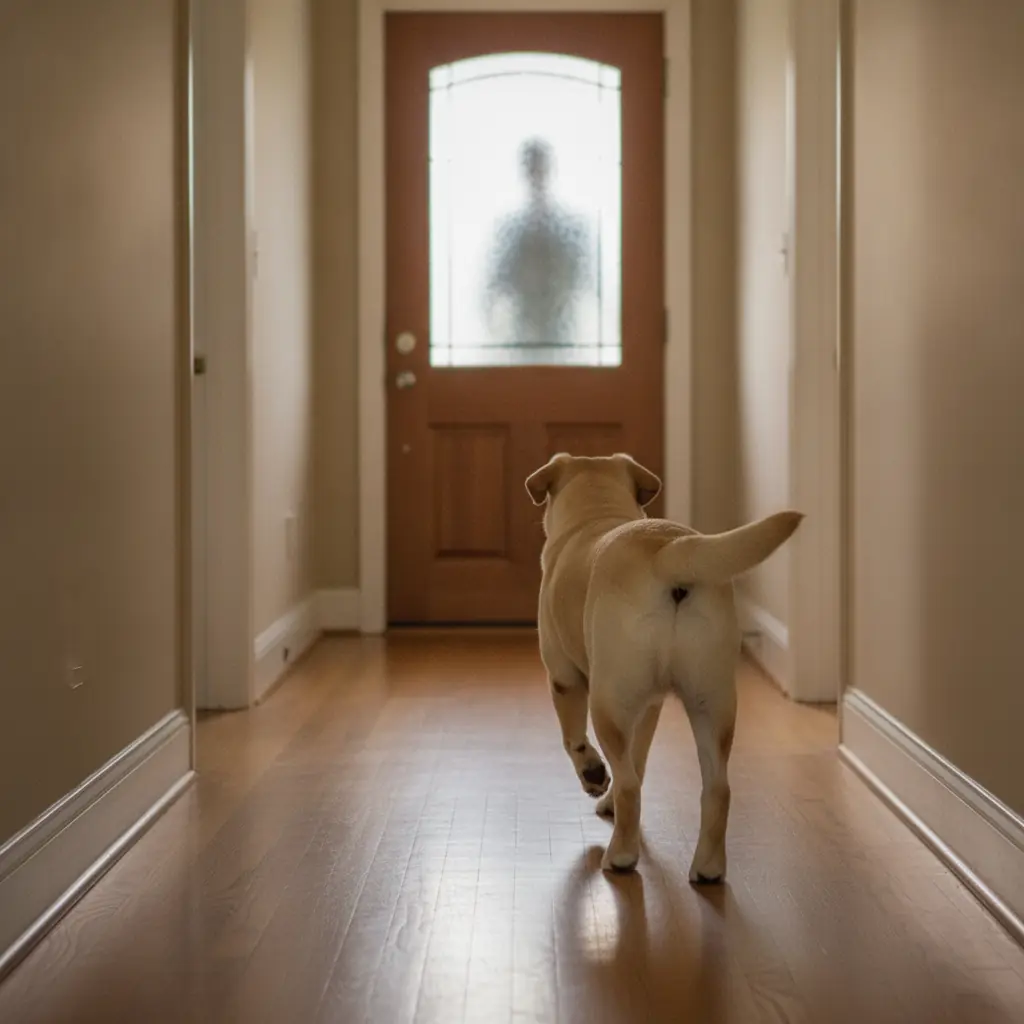
A visitor rings the bell. The dog runs to the door, tail vertical and wagging fast, body stiff, staring through the door. Many people read the wag and open the door. But tail-tip wag plus stiff body plus hard stare is arousal, not friendliness. Opening the door now often produces a charge or a bite. Better plan: stop, take the dog to another room or cue it to a mat, let the arousal settle, then greet. Reading the whole dog changes the script.
Quick check
Your dog at the door has a stiff body, a vertical tail with tight wag, and a hard stare. You should:
Pick an answer to see why.
Open the door, the wag means happy.
Not quiteThat wag cluster is arousal, not happiness.
Manage the arrival: move the dog, let it settle, then greet calmly.
CorrectYes. Read the whole dog, then change the picture.
Ignore the dog and hope for the best.
Not quiteIgnoring arousal often ends badly.
Lesson 2
The family photo
Child hugs the dog for a photo. The dog turns its head away, shows whale eye, and licks its lips.
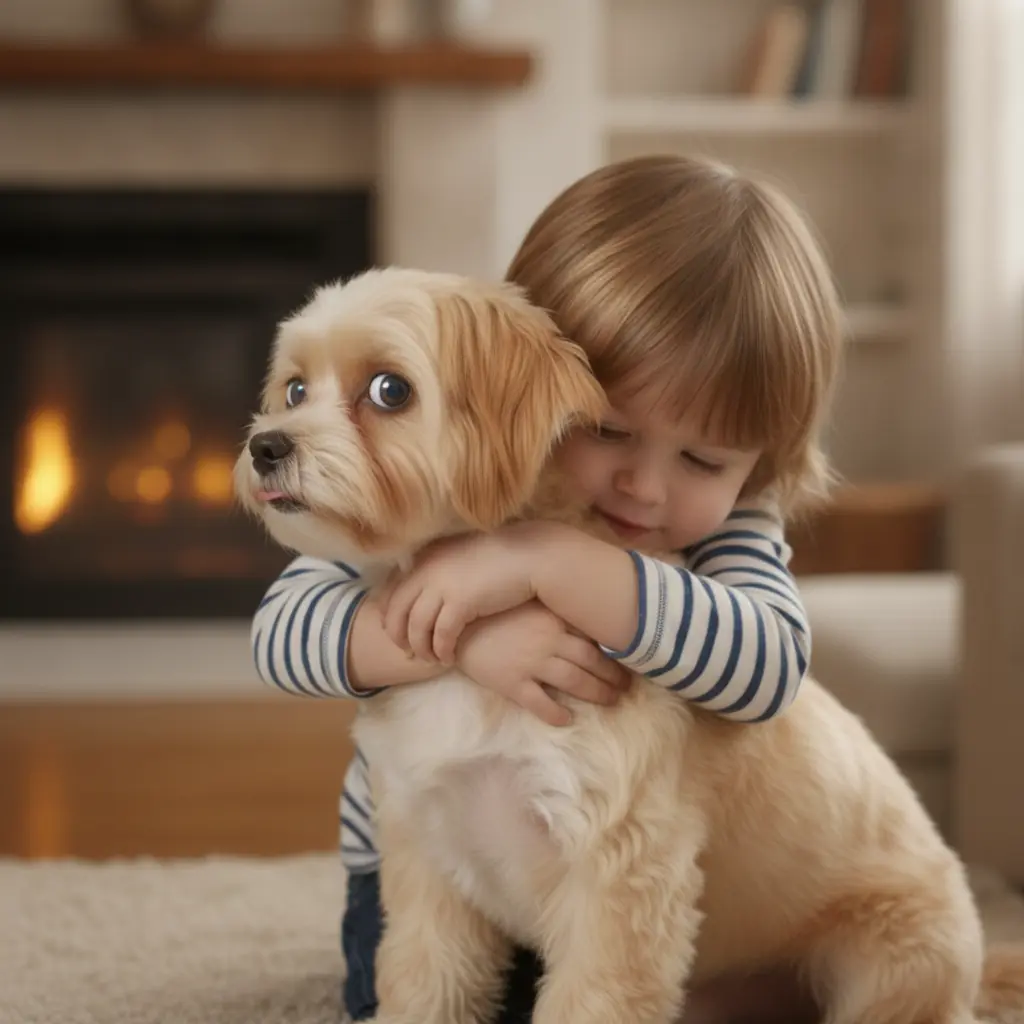
The moment looks cute. The dog is telling you the opposite. Head turn, whale eye, and lip lick together are a cluster: "I am uncomfortable, please stop". A dog in this position is climbing the ladder. The best photo is the one you do not take. Gently end the hug, praise the dog for patience, and let the kid give a treat from an arm's length. Next time, offer the dog a chance to choose contact instead of being clamped into it.
Quick check
During a hug for a photo, the dog shows head turn, whale eye, and lip licks. What should happen next?
Pick an answer to see why.
Hold the hug, smile for the camera.
Not quiteThat cluster is a please-stop signal, not a photo op.
Gently end the hug and give the dog space.
CorrectYes. The photo is not worth climbing the ladder.
Hug tighter.
Not quiteTightening pressure is exactly the opposite move.
Lesson 3
The off-leash approach
A stranger's off-leash dog runs straight at your on-leash dog. Read the whole picture fast.
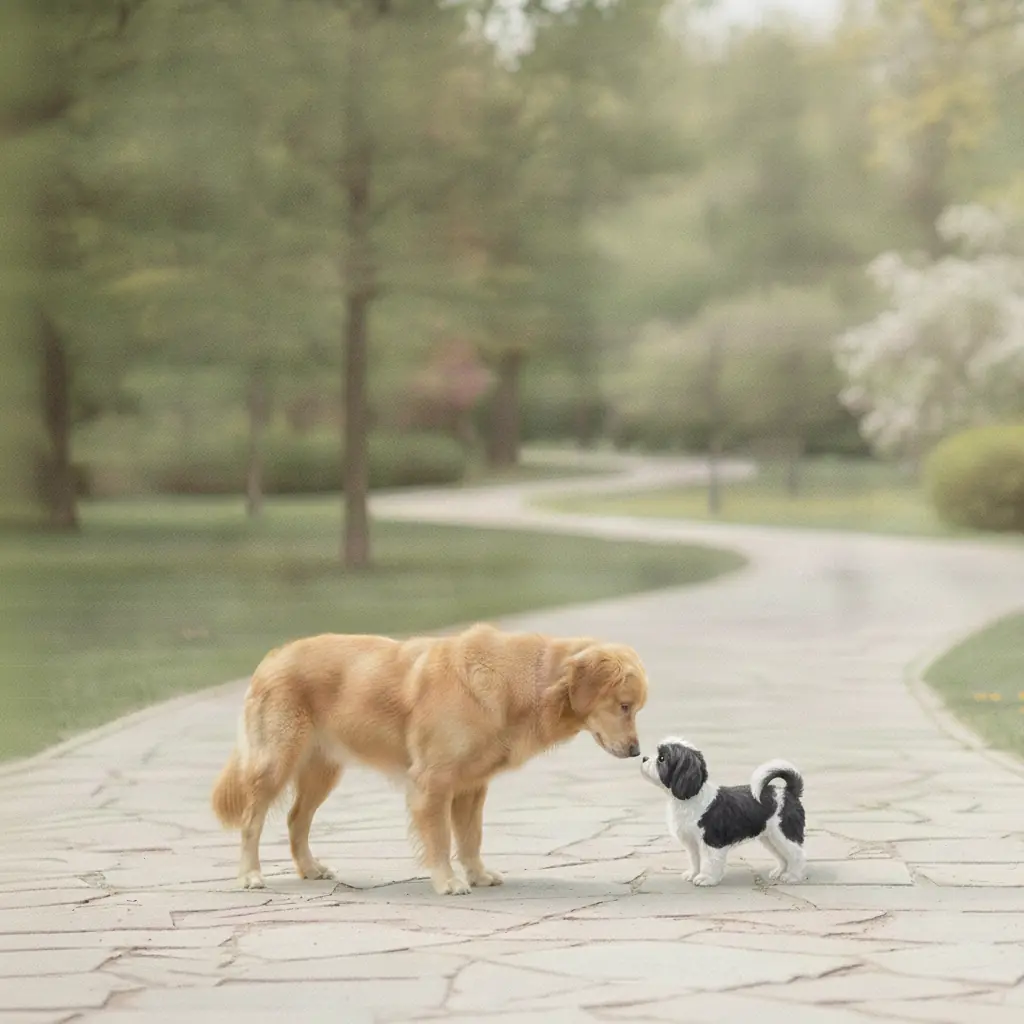
Straight-on, fast, no curve, tail high and stiff. Your own dog goes still and tucks. This is not a greeting, it is a collision of mismatched states. Your best moves: step sideways off the line, turn your own dog's body so it is not facing the approach head-on, lower your voice, and if the owner is in earshot, ask calmly for the dog to be called. Avoid scooping your dog into the air, which often spikes the other dog. Breaking the line of approach almost always helps.
Quick check
An off-leash dog runs straight at your leashed dog. The most helpful first move is:
Pick an answer to see why.
Step off the line of approach and turn your dog sideways.
CorrectYes. Breaking the line changes the social geometry.
Scream at the oncoming dog.
Not quiteYelling often escalates arousal.
Lift your dog overhead.
Not quiteLifting the dog often triggers the other dog to jump and bite.
Lesson 4
The vet visit
Cool lobby. Panting. Tucked tail. Frequent lip licks. What is the most helpful thing you can do?
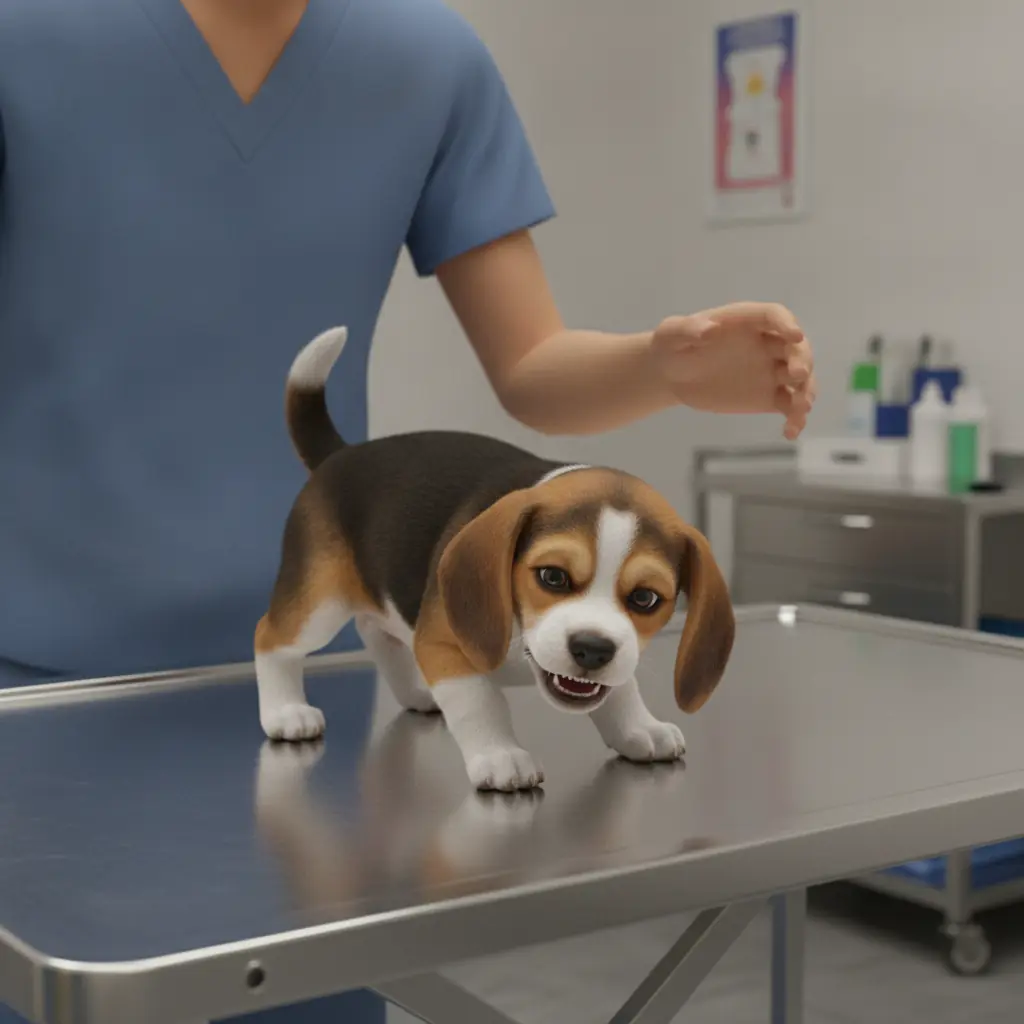
Panting in a cool room rules out heat. Add a tucked tail and frequent lip licks and you have a dog climbing the ladder in a place it cannot leave. Helpful moves: move to the quietest corner, sit on the floor so you are at the dog's level, offer a chew if the dog will take it, and block the view of the door where new dogs enter. Ask the tech if you can wait in the car and be called when the room is ready. Small changes lower the climb.
Quick check
Which move is most likely to help a stressed dog in a vet lobby?
Pick an answer to see why.
Sit on the floor in a quiet corner and offer a chew.
CorrectYes. Lower position, less visual load, small job to focus on.
Stand in the middle of the room with the leash tight.
Not quiteTension in the leash often transfers to the dog.
Let the dog greet every other dog in the lobby.
Not quiteThat usually raises stress, not lowers it.
Lesson 5
Your own dog, every day
The real win is noticing the small signals from the dog you live with, every single day.
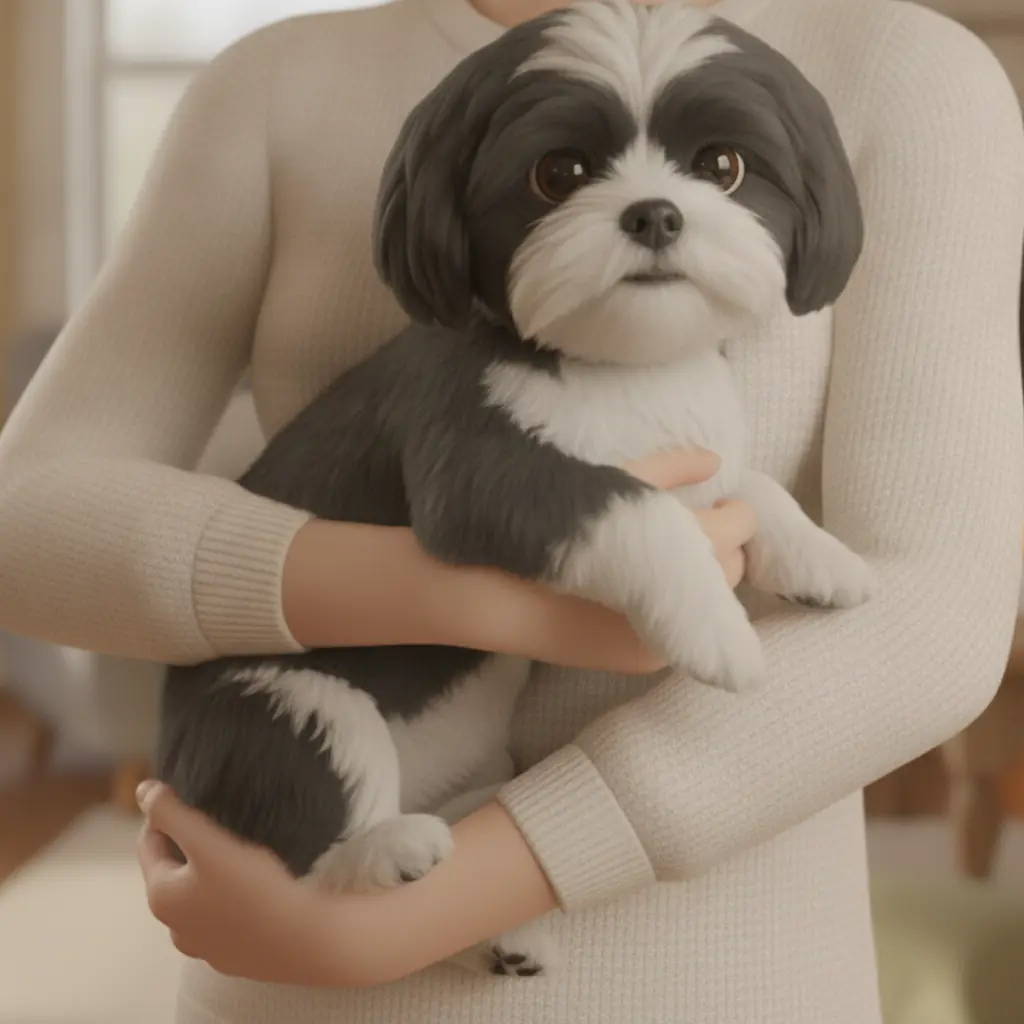
You will never practise this course more than with the dog in your home. Set a small habit: once a day, spend one minute just watching. What is the tail doing? The ears? The mouth? Is this today's baseline, or a change from yesterday? Most relationship breakdowns between people and dogs come from missed small signals that stacked up. Most deep bonds come from the opposite: one human who notices, and one dog who learns it can always be heard. That is the whole point.
Quick check
The single best habit to build is:
Pick an answer to see why.
Spend a minute a day just watching your dog.
CorrectYes. Small, daily, attentive. That is the whole game.
Buy more toys.
Not quiteNot what moves the needle.
Train more commands.
Not quiteCommands are useful, but not the core of reading body language.
Lesson 6
The food bowl
You walk past your dog while it eats. It goes still, lowers its head over the bowl, and freezes. What is it saying?
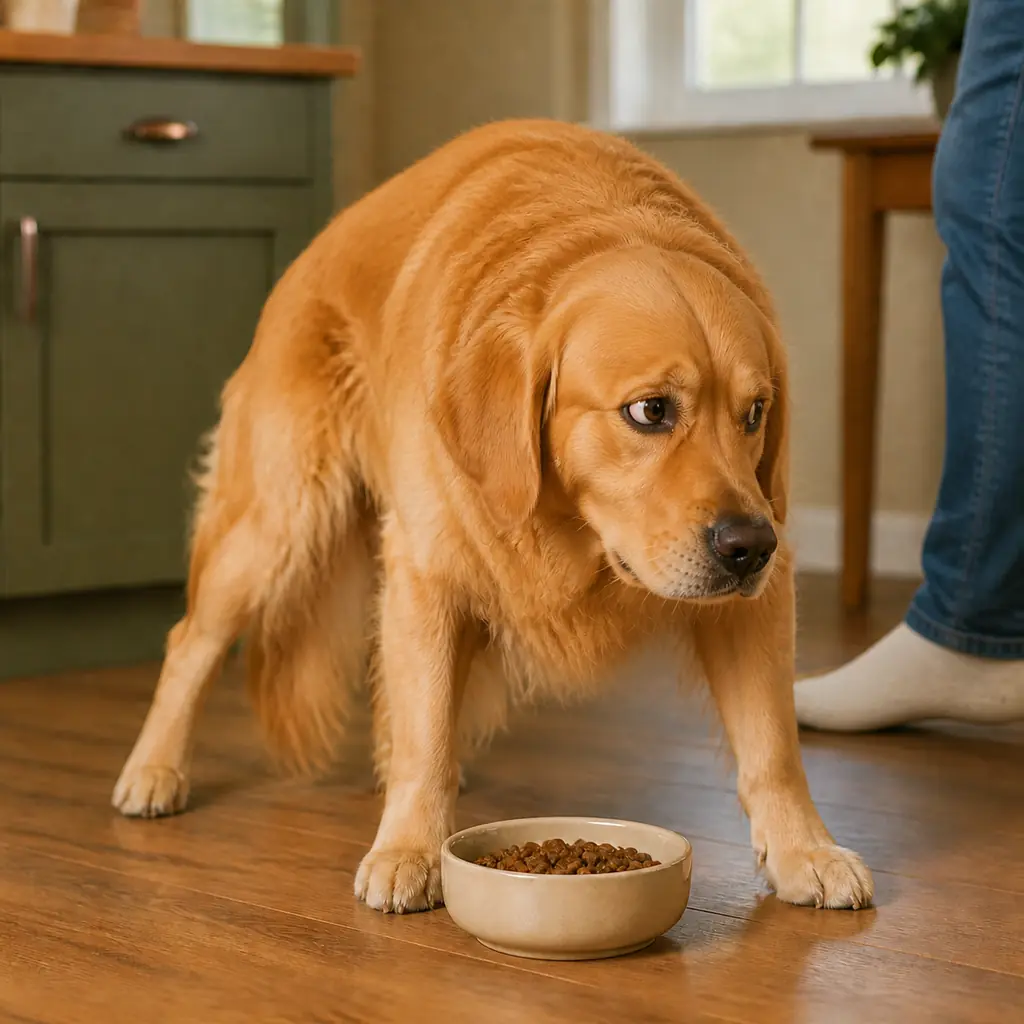
Guarding food is normal dog behaviour, not a character flaw. The stiffening, the low head over the bowl, the hard side-eye that tracks you: these are a polite early request to leave the resource alone. The worst response is to reach in, take the bowl, or punish the freeze, all of which teach the dog that people near food mean loss, and push it up the ladder toward a growl or snap. Better plan: give space while it eats, and build trust separately by tossing something better into the bowl as you pass, so your approach predicts good things, not loss.
Quick check
Your dog freezes and hardens over its bowl as you pass. The best response is:
Pick an answer to see why.
Give space now, and later build trust by adding a treat to the bowl as you pass.
CorrectYes. Space defuses the moment; trading up changes what your approach predicts.
Take the bowl away to show who is boss.
Not quiteThat confirms the dog's fear that people near food mean loss, and escalates guarding.
Punish the freeze so it stops.
Not quitePunishing the warning removes the warning, not the guarding.
Lesson 7
Meeting a new dog
Two dogs meet for the first time. One curves in sideways and sniffs; the other stands square and stares. Who is being polite?
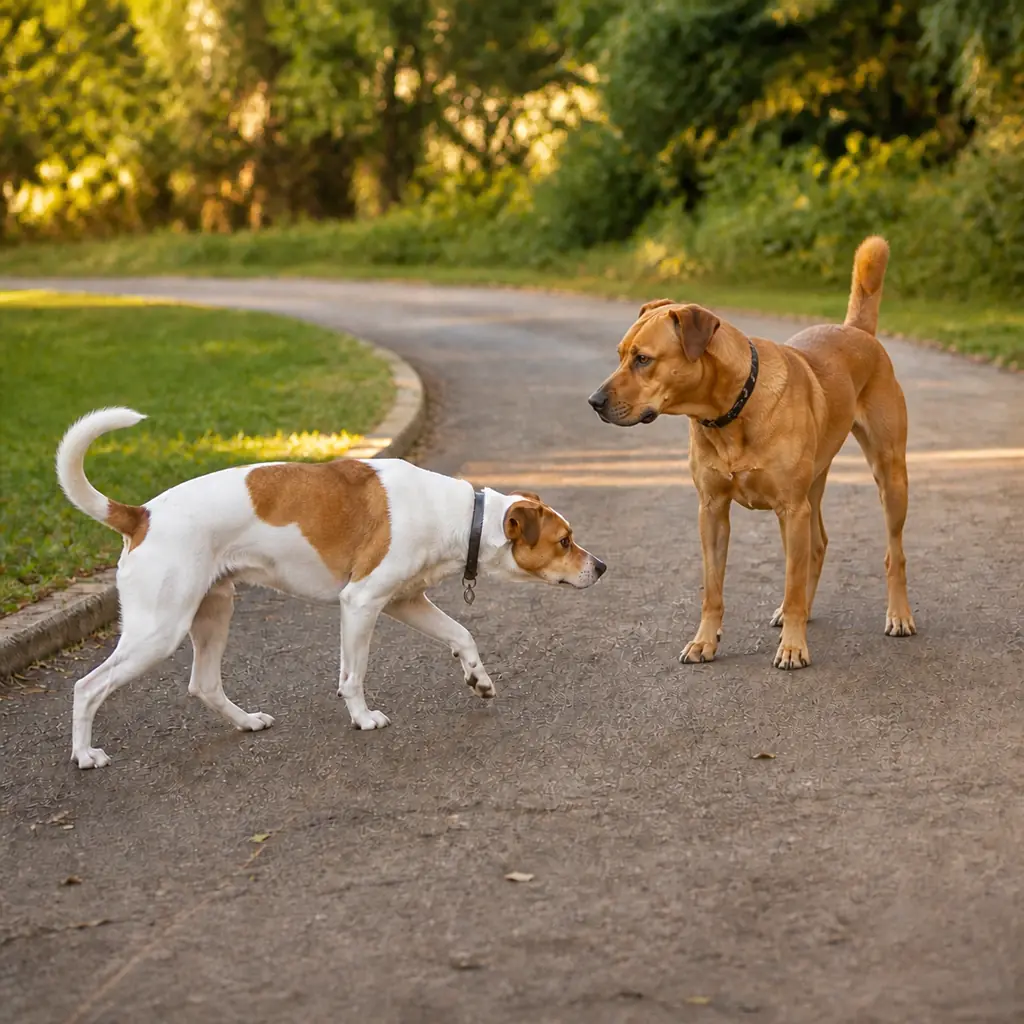
Polite dogs greet in an arc, not head-on. They approach on a curve, sniff briefly at the side or rear, keep their bodies loose, and look away often. A dog that marches straight in, stands square, and locks a stare is being rude or is worried, even if its tail is up. Good introductions happen on a walk in parallel, at a distance that both dogs can handle, with the option to move away. Let them choose the pace, keep leashes loose, and end the greeting after a few seconds before it curdles. Short and sweet beats long and forced.
Quick check
Which dog is greeting politely?
Pick an answer to see why.
The one that curves in sideways, sniffs briefly, and looks away.
CorrectYes. The curve, the brief sniff, and the look-away are all polite signals.
The one that walks straight in and holds a hard stare.
Not quiteStraight-on with a hard stare is rude or worried, not friendly.
Whichever one has the higher tail.
Not quiteTail height alone tells you arousal, not manners; read the whole dog.
Lesson 8
Meeting the cat
Your dog meets a cat for the first time. Its body lowers, it goes very still, and it locks a hard stare on the cat. Cute, or a warning?
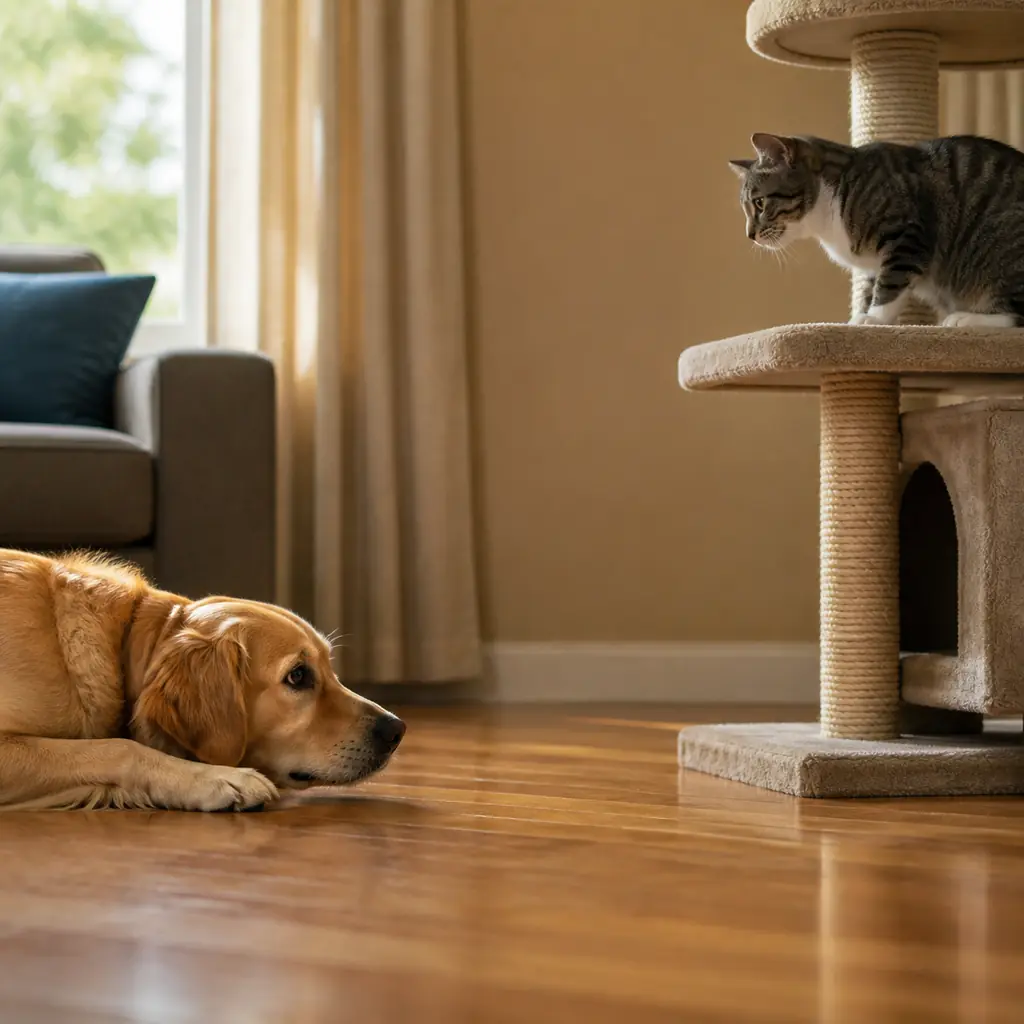
A dog that goes low, still, and locks a hard stare on a small moving animal is not admiring it; that is a predatory or highly aroused pattern, and a chase can switch on in an instant. This is a moment to add distance and structure, not to let them work it out. Keep the dog on a leash, reward it for looking at the cat and then back at you, and give the cat a high escape route it can always reach. Build the relationship in short, calm sessions where the dog is under threshold. A soft, loose, look-away dog is fine; a frozen, staring one needs help.
Quick check
Your dog goes low and still with a hard, locked stare at the cat. You should:
Pick an answer to see why.
Let them sort it out on their own.
Not quiteA frozen stalk can flip to a chase in a blink; leaving it to chance is risky.
Add distance, keep a leash on, and reward calm look-aways from the cat.
CorrectYes. Distance keeps the dog under threshold, and rewarding look-aways builds a calm pattern.
Hold the dog's face toward the cat so it gets used to it.
Not quiteForcing proximity raises arousal and can trigger exactly what you fear.
See it on your own pet
Point Pawfect at your dog or cat and it picks out the tails, ears, eyes and postures from these guides, then plays them back as a playful caption you can keep.
Where this comes from
Dogish 101 is the short body-language course inside the Pawfect app. Its lessons are written in plain words and draw on published work including:
- Turid Rugaas, On Talking Terms with Dogs: Calming Signals
- Patricia McConnell, The Other End of the Leash
- Sophia Yin, Body language posters (drsophiayin.com)
- AVSAB, Position statements on canine behavior
- AKC and ASPCA, Public body-language articles
- Kendal Shepherd, The Canine Ladder of Aggression
- Fear Free Pets / Karen Pryor Academy, Applied behavior material
- Quaranta, Siniscalchi and Vallortigara, Asymmetric tail-wagging responses by dogs to different emotive stimuli (2007)
For serious or ongoing concerns, please consult a certified veterinary behaviorist. No online course replaces a qualified professional.
The illustrations are AI-generated artwork made for the Dogish 101 course.