The basics
Why body language matters, and how to start reading it.
Lesson 1
Why body language matters
Dogs do not use words. Nearly everything they want to tell you shows up in their body first.

Dogs communicate with their whole body. Ears, eyes, mouth, tail, weight, and motion all carry meaning. When people miss those signals, dogs often feel unheard and sometimes escalate to barking, growling, or snapping just to be understood. The good news is that most everyday signals are easy to spot once you know what to look for. This course walks through them one at a time, so by the end you can glance at a dog and have a pretty good guess at what it is feeling right now.
Quick check
Which of these is most true about how dogs communicate?
Pick an answer to see why.
They mostly use barks and whines.
Not quiteSound matters, but the visible body does most of the talking.
They use their whole body: ears, eyes, mouth, tail, and posture.
CorrectYes. Vocal sounds are just one small channel.
Only the tail really matters.
Not quiteThe tail is helpful but it is just one signal among many.
Lesson 2
Know the baseline first
Before you can read a change, you need to know what calm looks like for that specific dog.

Every dog has a baseline: the way its face, ears, mouth, tail, and body look when it feels safe and has no strong feelings. Some dogs naturally carry their tails high. Some breeds always have floppy ears. A tightly wound Jack Russell and a dozy Basset Hound will never look identical. Spend a few quiet minutes watching your dog when nothing is happening. That picture is your reference. Every later lesson is really about spotting the difference between the baseline and right now.
Quick check
Why does baseline matter?
Pick an answer to see why.
So you can compare what is normal for this dog with what you are seeing now.
CorrectExactly. Signals only make sense against a baseline.
So you can compare your dog to other dogs.
Not quiteBreeds differ, and so do individuals. Your dog is its own baseline.
So you can copy the baseline pose back at the dog.
Not quiteDogs are not looking for you to mirror their poses.
Lesson 3
Read the whole dog
One signal on its own can mean many things. A cluster of signals tells you the story.
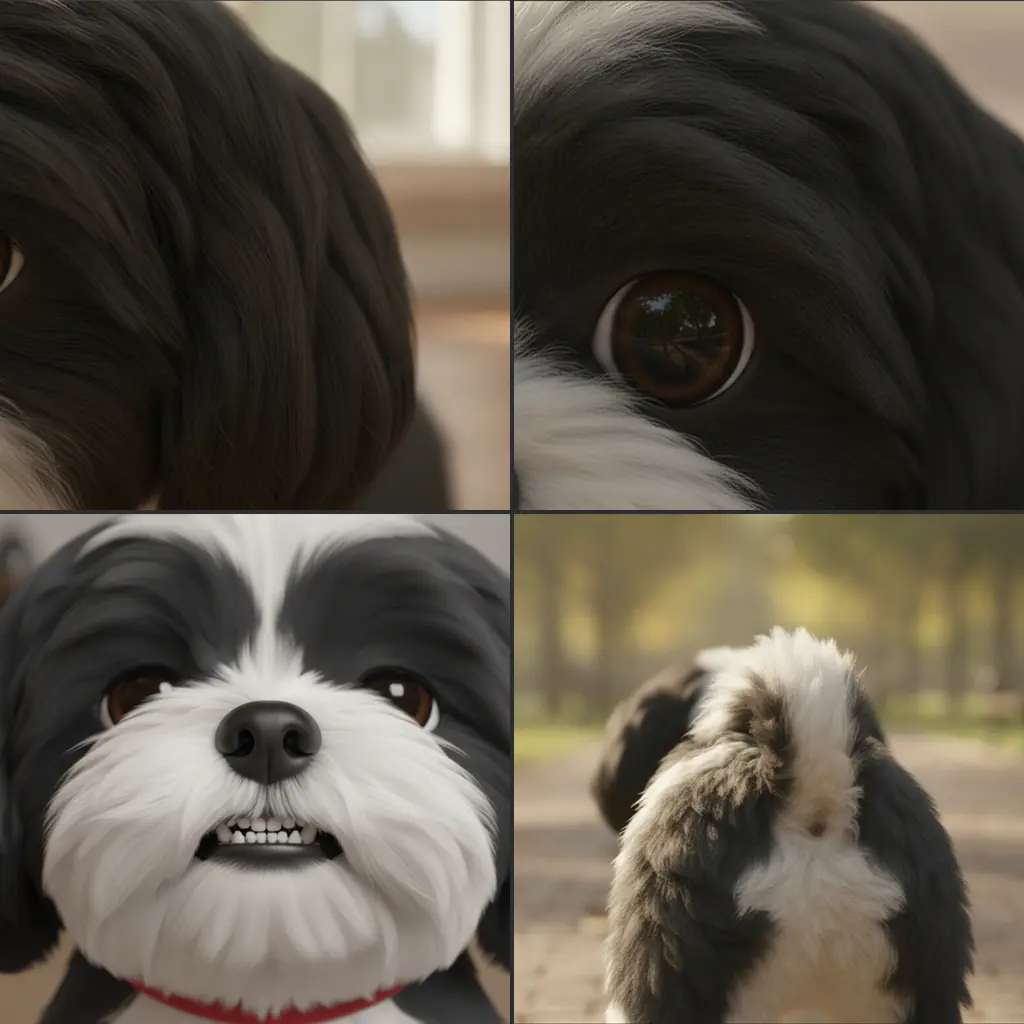
A wagging tail on its own does not mean the dog is happy. A panting mouth does not always mean stress. Pros look at three or four signals together before making a call. If the tail is low and stiff, the mouth is tight, and the dog is leaning away, the message is clear even though no single one of those signals was decisive. This course teaches each signal separately so you can recognise it. In real life, always zoom out and read the whole dog.
Quick check
Your friend says, "my dog is wagging so he is fine". What is the best reply?
Pick an answer to see why.
Wagging can mean many things. Let us check the rest of the body too.
CorrectWagging is one data point. Read the whole dog.
If the tail wags, the dog is happy. End of story.
Not quiteA stiff fast wag on a tense dog can signal the opposite of happy.
The tail never matters, ignore it.
Not quiteIt does matter. It is just one piece of the puzzle.
Lesson 4
Context is king
The same posture can mean different things in different settings. Always ask: what just happened?

A low crouch while playing with a friend usually means, "let us go". The same crouch at the vet may mean, "I do not feel safe, please give me space". Nothing about the dog changed. The room did. When you read a signal, always factor in where you are, who is around, what just happened, and what the dog is looking at. Context does not override the signal, but it often decides which of its possible meanings applies.
Quick check
A dog tucks its tail and walks slowly. Which piece of context matters most?
Pick an answer to see why.
What the dog is walking toward and what just happened.
CorrectSame signal, many meanings. Context picks the right one.
The breed of the dog.
Not quiteBreed affects baseline, not the meaning of a sudden change.
Whether the owner is tall or short.
Not quiteNot usually relevant.
See it on your own pet
Point Pawfect at your dog or cat and it picks out the tails, ears, eyes and postures from these guides, then plays them back as a playful caption you can keep.
Where this comes from
Dogish 101 is the short body-language course inside the Pawfect app. Its lessons are written in plain words and draw on published work including:
- Turid Rugaas, On Talking Terms with Dogs: Calming Signals
- Patricia McConnell, The Other End of the Leash
- Sophia Yin, Body language posters (drsophiayin.com)
- AVSAB, Position statements on canine behavior
- AKC and ASPCA, Public body-language articles
- Kendal Shepherd, The Canine Ladder of Aggression
- Fear Free Pets / Karen Pryor Academy, Applied behavior material
- Quaranta, Siniscalchi and Vallortigara, Asymmetric tail-wagging responses by dogs to different emotive stimuli (2007)
For serious or ongoing concerns, please consult a certified veterinary behaviorist. No online course replaces a qualified professional.
The illustrations are AI-generated artwork made for the Dogish 101 course.