The tail
More than happy vs not. Tails have many dialects.
Lesson 1
Tail position
Where the tail lives on the body is often a better clue than whether it moves.
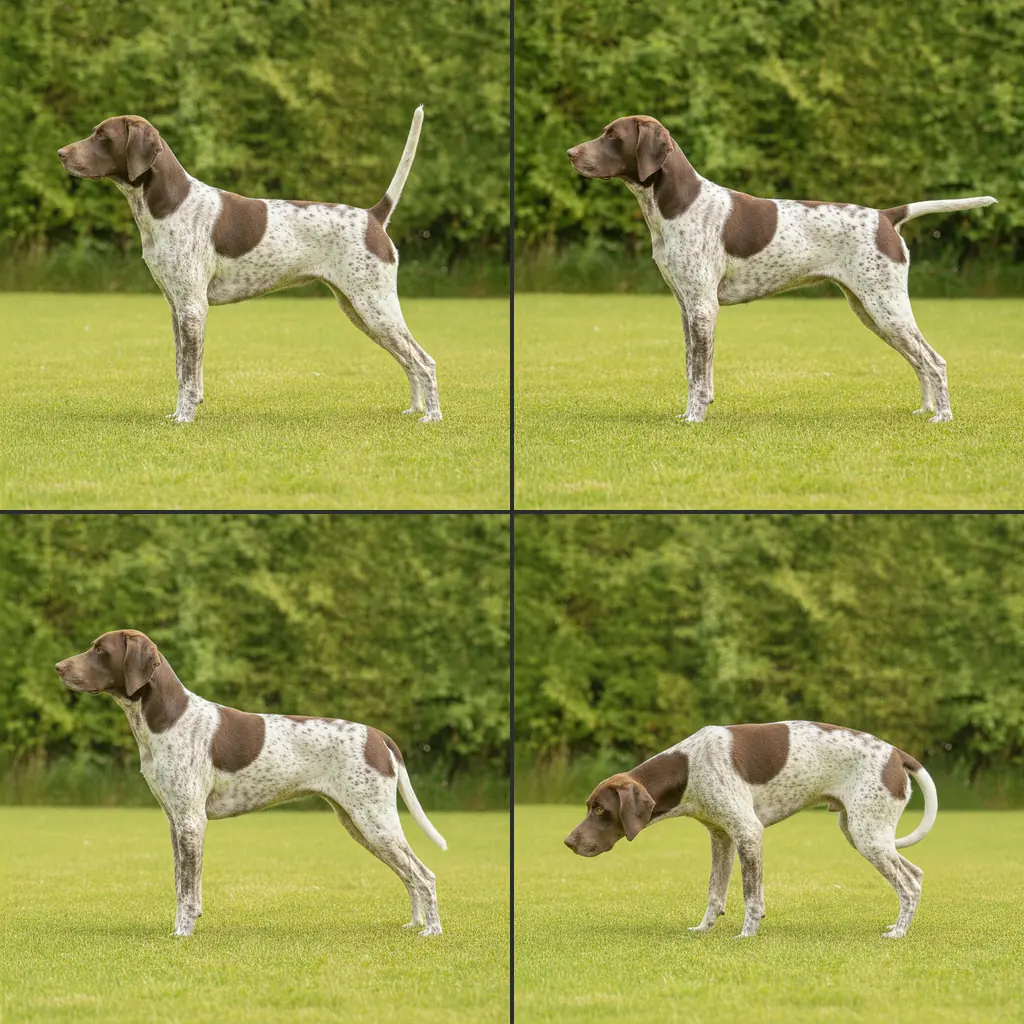
Think of the tail as a mast. Held high and stiff often signals arousal or confidence, sometimes bordering on confrontational. Held at mid height, at roughly the dog's spine line, is usually relaxed and neutral. A low tail suggests uncertainty, sometimes appeasement. Tucked under the belly is a clear, "I feel small right now", usually fear or severe stress. Always read position against the breed baseline: a Husky naturally curls its tail high, a Greyhound naturally carries it low.
Quick check
A Beagle you have never met approaches with its tail held stiff and vertical. The best read is:
Pick an answer to see why.
Friendly and excited, come pet him.
Not quiteStiff and vertical is arousal, not relaxation. Give space first.
Highly aroused, possibly confrontational. Give space and let him choose.
CorrectYes. High, stiff, still often means, not now.
Tired and sleepy.
Not quiteTired dogs do not carry stiff vertical tails.
Lesson 2
Wag speed and stiffness
A fast wag is not always a happy wag. Stiffness changes everything.
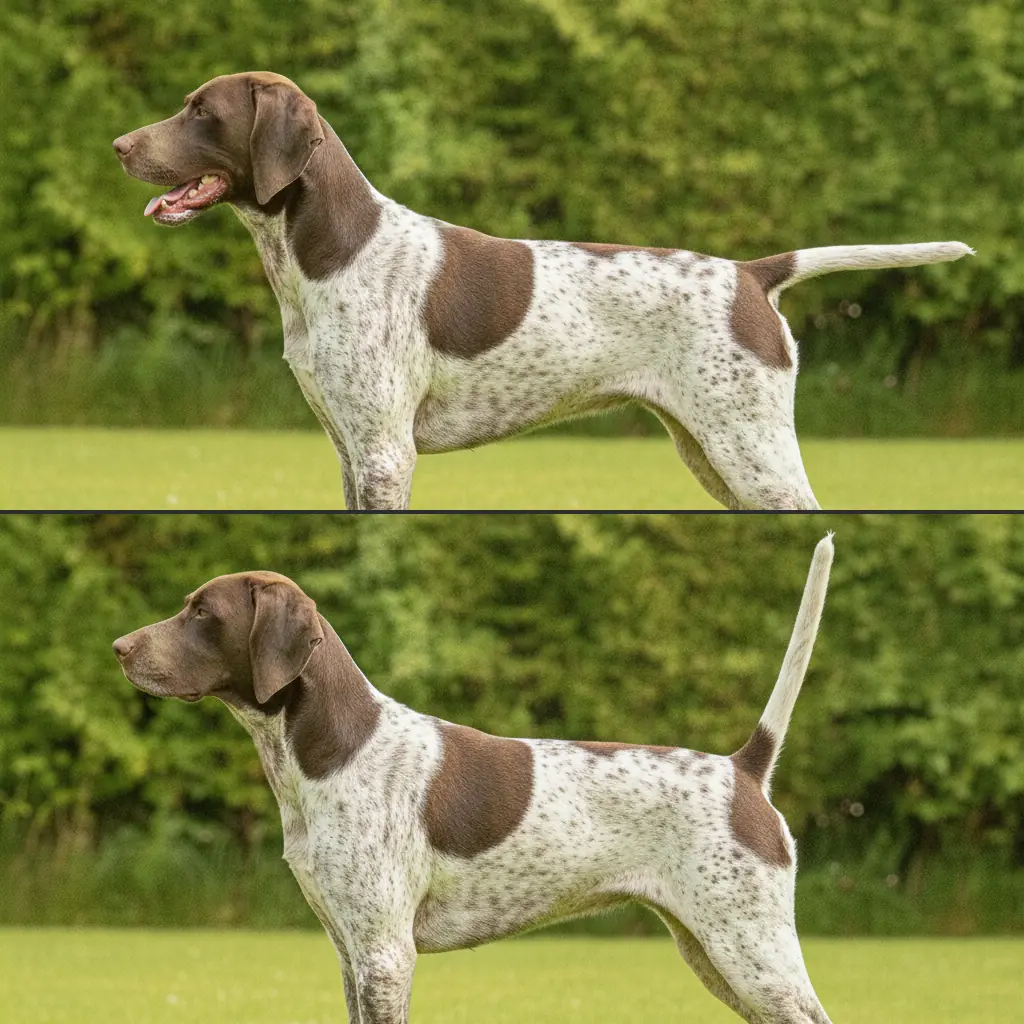
Loose, sweeping wags that move the whole rear end are the classic "I am delighted to see you" wag. Tight, fast wags where only the tail tip twitches can actually mean high arousal or tension. The rest of the body tells you which one you are looking at. Loose body plus sweeping wag equals friendly. Stiff body plus fast narrow wag equals, "something is up, stay alert". Neither wag on its own is a green light for strangers to reach in.
Quick check
Which wag is most likely a friendly greeting?
Pick an answer to see why.
Narrow fast tail-tip flicks, body frozen.
Not quiteThat pattern suggests arousal, not friendliness.
Wide sweeping wag that moves the hips too, soft body.
CorrectWhole-body wags are the real friendly wag.
No wag at all, ears back.
Not quiteThat often signals discomfort rather than a greeting.
Lesson 3
Left versus right bias
Scientists have noticed that many dogs wag more to one side depending on how they feel.
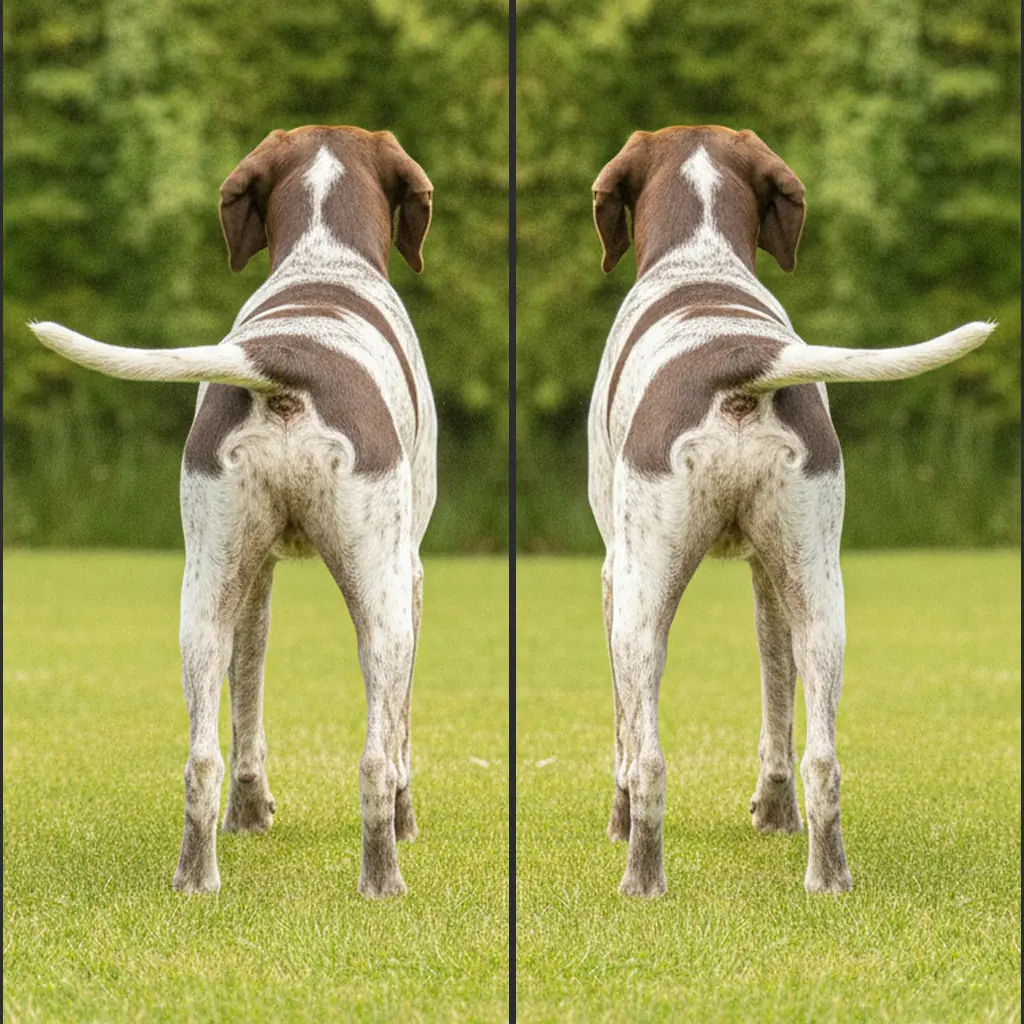
A line of research, starting with Quaranta and colleagues in 2007, found that dogs tend to wag more to the right side of their body when they feel something positive, such as seeing a beloved person, and more to the left side when they feel unsure or mildly negative. Other dogs in the room seem to notice and respond differently to each. You probably will not measure this in real life. It is still a fun reminder that tail movement is a full signal with sides, not just a simple on or off switch.
Quick check
In that research, a wag biased to the dog's right side most often matched:
Pick an answer to see why.
Positive feelings, like seeing a favourite person.
CorrectRight bias, positive feeling. Left bias, uncertain.
Hunger.
Not quiteNot what the research found.
Pain.
Not quiteNot what the research found.
Lesson 4
Base height and breed
Some breeds carry their tails high by default. Others hang low. Read the change, not the absolute.
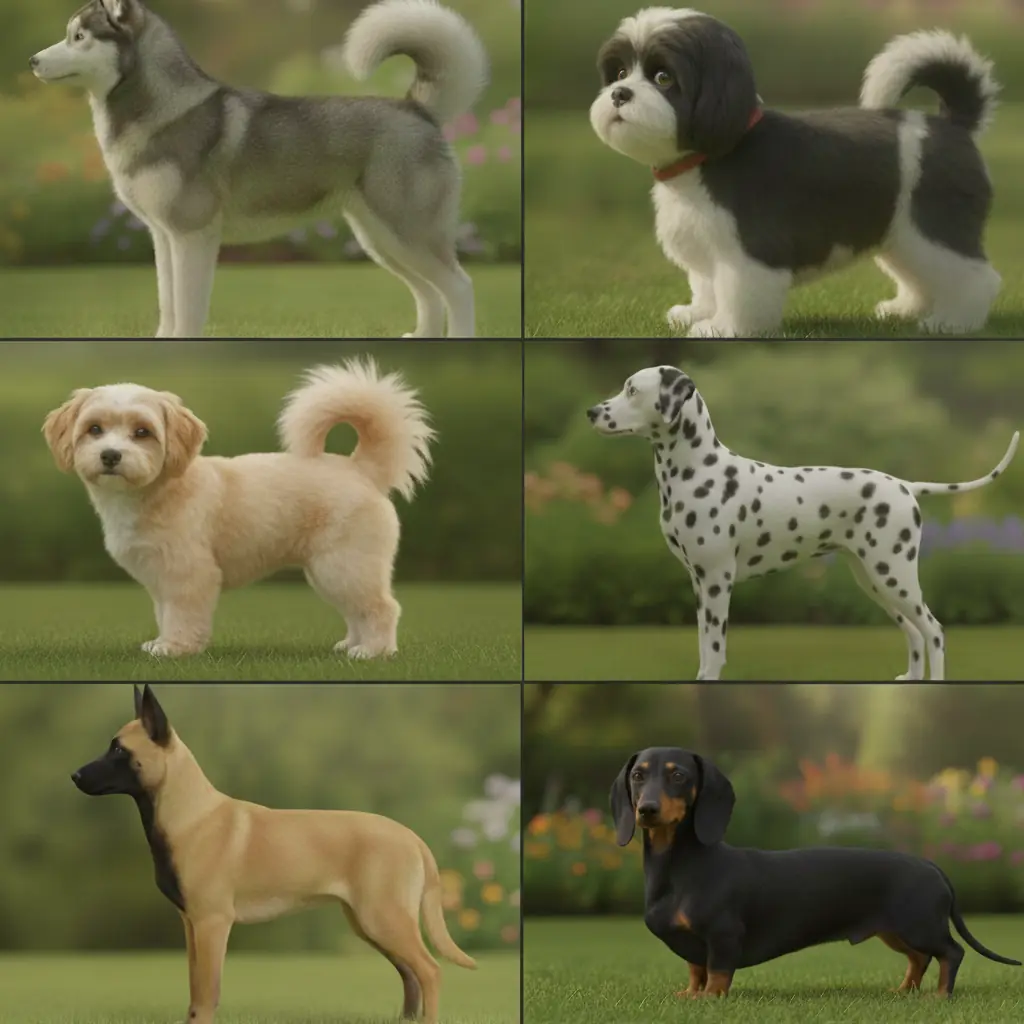
Tail shape and natural carriage vary wildly across breeds. A Pug's tight curl, a Labrador's otter tail, a Shiba's sickle tail, a Whippet's tucked-low carriage, all look different at rest. The trick is to compare the dog now to itself ten minutes ago. If a normally high-carrying breed suddenly drops its tail, that is a real signal. If a naturally low-carrying breed lifts its tail higher than usual, that is too. Always measure change from the individual's baseline.
Quick check
Your Husky normally carries its tail in a high curl. Today the tail hangs low and loose. What does that most likely mean?
Pick an answer to see why.
Nothing, tails move around.
Not quiteA drop from high baseline to low is a real change worth noticing.
Something has shifted in how the dog feels. Worth paying attention.
CorrectYes. Change from baseline is the signal.
The dog is now a different breed.
Not quiteBreed does not change.
See it on your own pet
Point Pawfect at your dog or cat and it picks out the tails, ears, eyes and postures from these guides, then plays them back as a playful caption you can keep.
Where this comes from
Dogish 101 is the short body-language course inside the Pawfect app. Its lessons are written in plain words and draw on published work including:
- Turid Rugaas, On Talking Terms with Dogs: Calming Signals
- Patricia McConnell, The Other End of the Leash
- Sophia Yin, Body language posters (drsophiayin.com)
- AVSAB, Position statements on canine behavior
- AKC and ASPCA, Public body-language articles
- Kendal Shepherd, The Canine Ladder of Aggression
- Fear Free Pets / Karen Pryor Academy, Applied behavior material
- Quaranta, Siniscalchi and Vallortigara, Asymmetric tail-wagging responses by dogs to different emotive stimuli (2007)
For serious or ongoing concerns, please consult a certified veterinary behaviorist. No online course replaces a qualified professional.
The illustrations are AI-generated artwork made for the Dogish 101 course.